
How Consumer Search Habits Changed In The Last Year
Learn how evolving search habits are changing how consumers find information and explore strategies to adapt your brand’s SEO approach.
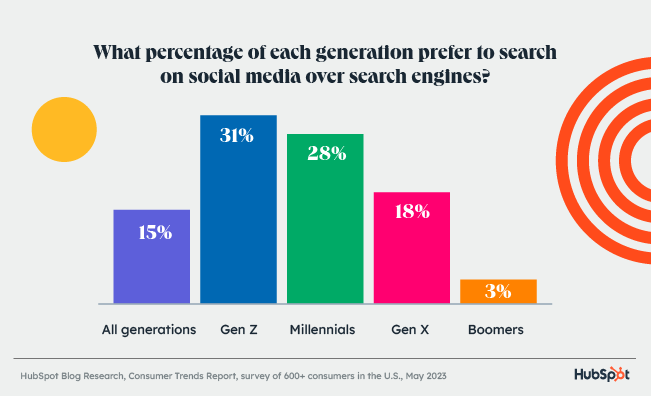
As user preferences evolve, younger generations like Gen Z and Millennials increasingly turn to social media sites over traditional search engines like Google. This shift is further influenced by the rise of generative AI technologies, reshaping how people search. HubSpot’s survey of over 600 consumers reveals these significant trends in search habits.
How Consumer Search Habits are Changing
Social Media Gains Traction
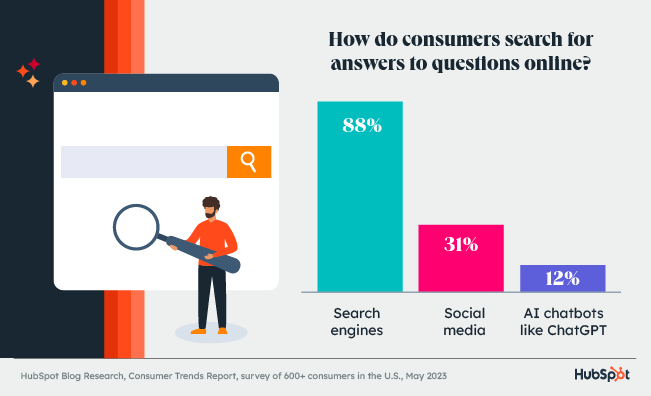
About 31% of consumers turn to social media sites to find answers to their queries, yet traditional search engines remain predominant, with 88% usage. Despite this, the preference for social media is notable among younger demographics. Specifically, 15% of all consumers and 29% of Gen Z and Millennials prefer using social media over traditional search engines. This trend suggests a significant shift towards social media platforms, expected to grow as these younger groups gain more economic influence.
AI’s Role in Search
AI chatbots like ChatGPT are now utilized by 12% of the population to perform search queries. While still a smaller fraction compared to traditional methods, the use of AI in search is poised for growth. A noteworthy 9% of consumers already prefer these AI solutions to traditional online searches or social media, a figure that is expected to increase as the technology evolves and becomes more integrated into daily search activities.
Mobile Search Dominates Consumer Behavior
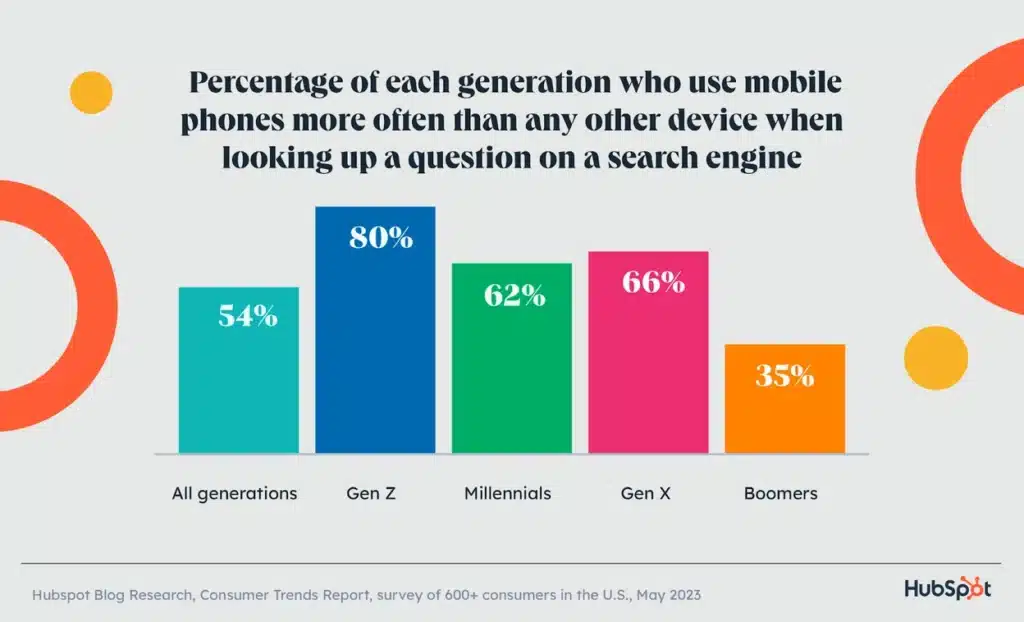
Currently, 54% of consumers predominantly use their mobile devices to search online. This trend toward mobile search is supported by various studies and HubSpot’s research, highlighting the growing necessity for mobile search optimization.
Most consumers, especially younger generations, prefer using their phones for internet queries. Specifically, 80% of Gen Z, 62% of Millennials, and 66% of Gen X primarily use mobile devices for searches, indicating a significant shift towards mobile-first habits.
This shift emphasizes the importance of optimizing web experiences for mobile platforms to meet the preferences and needs of these mobile-first users.
Consumers Still Favor Search Engines for Information
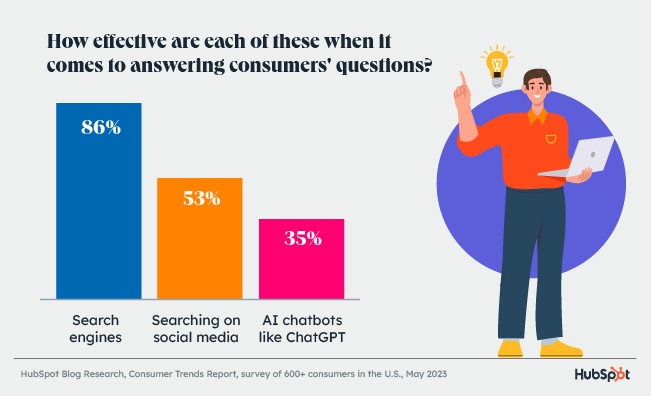
Despite the growing popularity of alternative search methods, traditional search engines remain the most effective way for consumers to find answers to their questions. While alternatives are gaining traction, conventional search engines remain the go-to for consumers seeking information and for brands aiming to drive traffic. However, these trends are worth monitoring to see if preferences change faster than anticipated.
Adapting to Changes in Search Behavior
As search behaviors evolve, understanding and adapting to these trends is important for brands aiming to maximize search traffic. With consumers increasingly exploring alternative platforms, your business must update its SEO strategy to include social media sites to stay competitive.